SusuPaa Platform
As Co-founder & Lead Engineer, I architected a multi-tenant fintech platform that digitizes traditional susu savings groups across Ghana. The system processes ₵900,000+ ($80k+) in monthly transaction volume on a custom double-entry ledger, with API response times optimized from 1.6s to 500ms.
// the problem
Susu savings groups across Ghana were managing hundreds of members and millions of cedis through WhatsApp messages, paper ledgers, and phone calls. Missed contributions went unnoticed for weeks, disputes over payouts were common, and group leaders had no reliable way to prove transaction history. Digital alternatives either didn't exist for the Ghanaian market or required a formal bank account that most participants didn't have.
Susu is a centuries-old savings tradition across Ghana and West Africa. Groups of people—family, friends, market traders, or colleagues—pool money together, with each member taking turns receiving the full pot. It's built on trust, community, and discipline. But managing it manually? That's where things get messy. Missed payments, unclear records, and disputes are common.
SusuPaa was created to bring this tradition into the digital age without losing what makes it work. As Co-founder & Lead Engineer, I've been responsible for architecting the entire backend infrastructure and leading a remote team of 5 engineers to build a platform that serves savings groups across Ghana.
The technical challenges were significant. We built a multi-tenant microservices architecture using Python and TypeScript that needed to handle financial transactions with absolute reliability. Every cedi passing through the system has to be tracked accurately—there's no room for error when people's savings are on the line.
At the centre of it is a custom double-entry accounting ledger I designed and operate. It governs every member contribution, payout, and group balance, and it is the system of record for the full monthly transaction volume moving through the platform. On top of it sits an atomic claim pattern over a PGBoss job queue, which guarantees exactly-once processing of payment and payout jobs under concurrent load—eliminating the double-crediting and orphaned settlements that plague naive queue consumers in payments work.
Reliability that people can audit also means reliability you can see. I stood up the observability stack—Prometheus metrics, Grafana dashboards, and Loki log aggregation—alongside PostgreSQL WAL archiving to S3 for point-in-time recovery, so a bad deploy or a corrupted write is recoverable to the second rather than to the last nightly dump.
One of my key contributions was tackling performance. Median API responses were taking 1.6 seconds, which felt sluggish for users checking their contributions or making payments. By refactoring PostgreSQL query plans and implementing a tiered Redis caching strategy, I brought that down to 500ms. The app now feels instant.
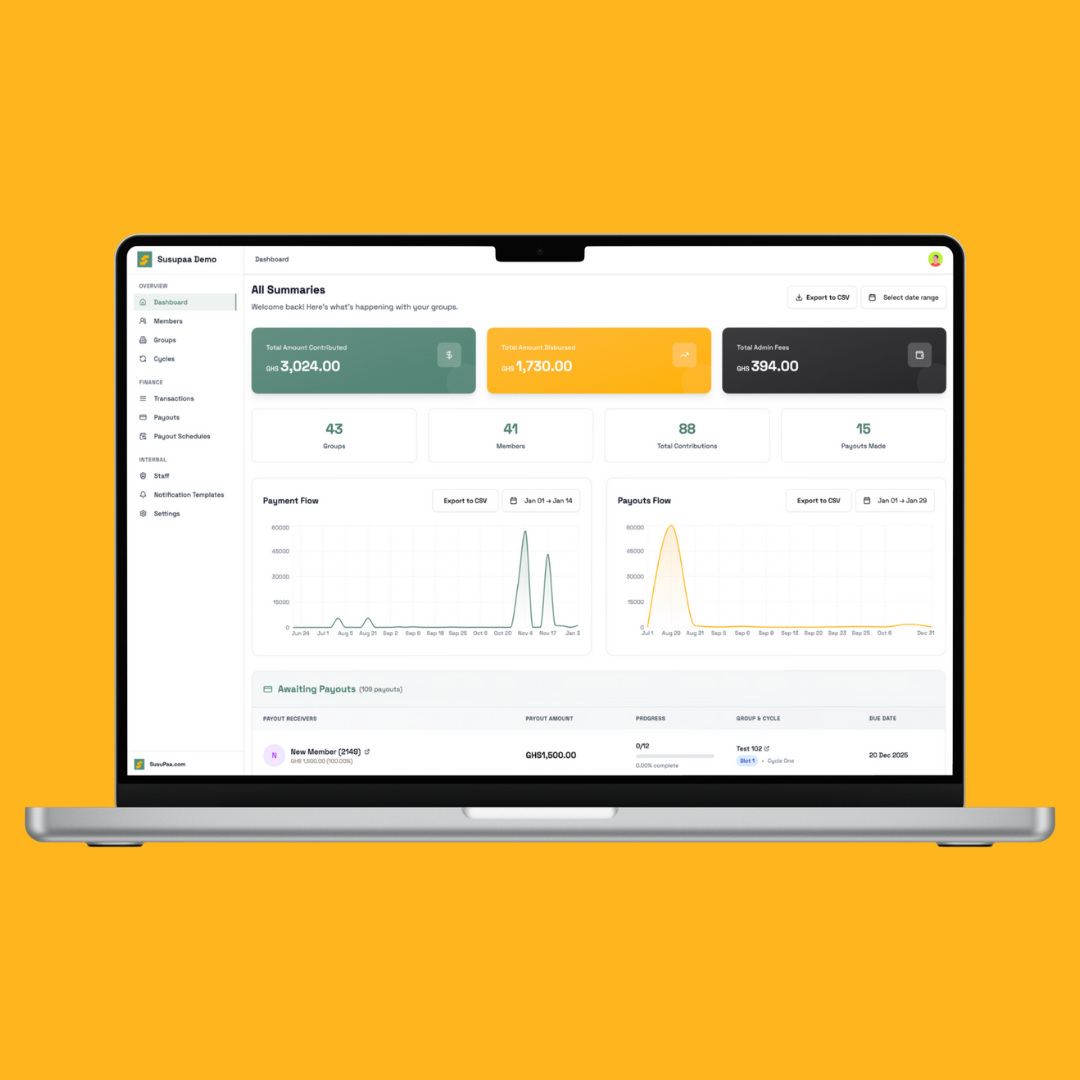
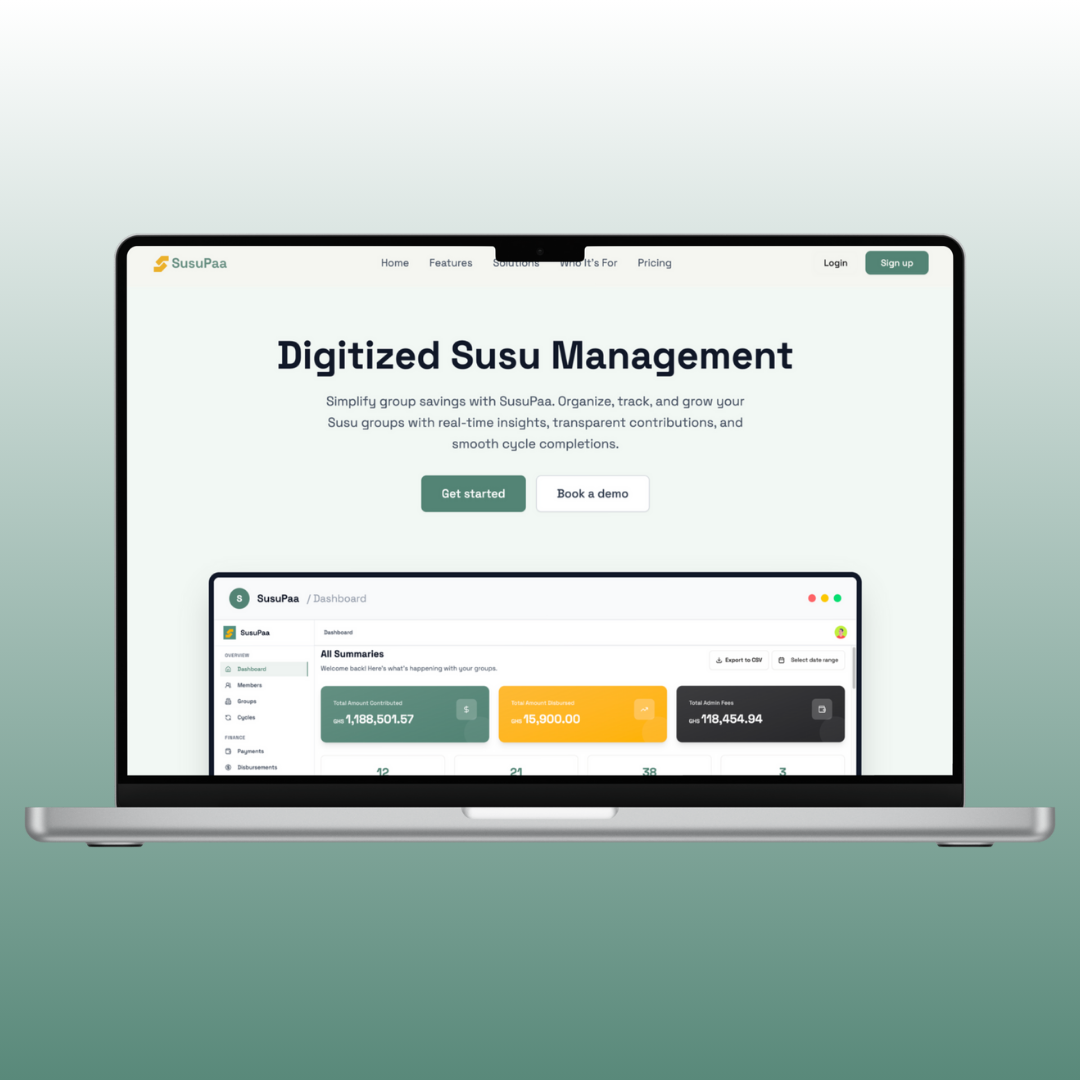
The platform handles secure contributions and payouts through mobile money aggregator rails (Hubtel, Moolre), covering MTN MoMo, Telecel Cash, and AirtelTigo end users, plus bank account payouts—importantly, user funds never sit with SusuPaa. We built automated cycle management with fair slot distribution, WhatsApp and SMS reminders to keep members accountable, and real-time analytics dashboards so group leaders can see exactly where their savings stand.
Beyond the code, I direct the technical roadmap, lead code reviews, and run sprint planning for our engineering team. It's a balance of hands-on architecture work and making sure the team can ship features efficiently.
Seeing the platform grow to over 262 groups and 2,000+ members since launch in July 2025 has been rewarding. We've been featured in Tech Labari and MyJoy Online, and the testimonials from group leaders who say we've "revolutionized how they manage savings" remind me why this work matters. We're modernizing a tradition that has helped communities build wealth for generations—just making it easier, faster, and more transparent.
Gallery
// retrospective
What I'd Do Differently
Starting with event sourcing from day one rather than retrofitting it later. Our transaction ledger needed audit trails that we had to rebuild after launch — designing the data model around immutable events from the start would have saved us two weeks of migration work. I'd also invest earlier in contract testing between services; we had integration bugs that only surfaced in staging because our unit tests mocked too aggressively.
Like what you see?
Let's build something together.